
Persian Governance Pilot Program Demonstrates Measurable Improvements

Persian Governance Pilot Program Demonstrates Measurable Improvements as pilot participants report better decisions, less groupthink, and growing resistance from stakeholders.
GFNN continues to support legacy information delivery technologies, including written language. The following is the text version of today's report.
Administrative Notice: Reading this report from beginning to end remains fully supported without requiring account registration.
By Sarah Collins
GFNN Washington Bureau
Federal officials released the first comprehensive evaluation Thursday of the Persian Governance Pilot Program Initiative, reporting measurable gains in decision quality, shorter meetings, significantly lower rates of organizational groupthink, and stronger long-term policy outcomes among agencies participating in the year-long demonstration project.
The report, issued jointly by the Department of Administrative Affairs and the Office of Administrative Continuity, concluded that organizations following the ancient Persian practice of discussing important policy matters over wine before reconsidering every proposal the following morning while sober consistently outperformed organizations relying upon conventional executive meetings and facilitated strategic planning sessions.
Officials emphasized that the pilot intentionally reproduced the historical Persian governance method rather than a modern adaptation.
"The objective was to determine whether the historical procedure itself produced measurable administrative benefits," Deputy Undersecretary Karen Whitmore said during a press briefing. "We evaluated the method as described in the historical record. Altering the procedure would have evaluated a different governance model."
The findings surprised few historians familiar with Persian administration but raised immediate concern among consultants, governance specialists, executive training organizations, and compliance professionals whose industries could be affected if agencies began replacing increasingly elaborate decision-making systems with a procedure that requires relatively little infrastructure.
Persian Governance Pilot Program Demonstrates Measurable Improvements and Exceeds Expectations
According to the 312-page evaluation, twelve federal agencies, four state governments, and twenty-three private organizations participated in controlled pilot sessions developed by the National University of Administrative Sciences.
Each participating organization followed the same historical sequence.
Senior decision makers assembled during the evening for structured brainstorming sessions in which wine was served under carefully documented conditions designed to reproduce the historical Persian practice as faithfully as practical. Participants were encouraged to speak candidly, question existing assumptions, and challenge long-standing policies regardless of organizational rank.
No binding decisions were permitted during the evening session.
Participants reconvened the following morning, before the start of the regular workday, to review all recommendations while sober. Every proposal required unanimous agreement during the morning session before entering the organization's normal approval process.
Researchers found remarkably consistent behavioral changes during the evening sessions.
Junior analysts openly challenged assistant secretaries.
Mid-level managers questioned strategic initiatives that had gone unchallenged for years.
Several executives acknowledged that programs receiving favorable public evaluations had produced disappointing internal results.
Observers reported unusually high levels of laughter throughout the sessions.
The evaluation also noted that several otherwise reserved executives displayed "unexpected interpersonal enthusiasm" after the second serving of wine. One agency director reportedly complimented nearly every member of the executive committee for their professionalism before attempting to organize what observers described as "an entirely unnecessary group photograph."
Another senior executive, known throughout government for exceptionally formal conduct in meetings, reportedly became noticeably flirtatious with a deputy administrator from another agency.
According to evaluators, both participants conducted themselves in an unusually collegial manner throughout the exchange but appeared somewhat uncomfortable when reviewing the meeting transcript during the following morning's validation session.
The report concluded that such episodes represented predictable consequences of reduced social inhibition rather than deficiencies in the governance process.
No disciplinary actions were reported during any pilot session.
Researchers observed that participants consistently became more willing to express disagreement, admit uncertainty, acknowledge previous mistakes, and explore unconventional alternatives without immediate concern for organizational hierarchy or political consequences.
Dr. Melissa Harmon, Senior Systems Analyst at the Institute for Strategic Compliance, said the observations closely matched the historical purpose of the Persian method.
"The Persians were not attempting to create entertaining meetings," Harmon explained. "They were deliberately reducing the social restraints that often prevent intelligent people from saying what they actually think. The following morning provided the necessary quality control."
Researchers found several consistent outcomes.
The number of unique policy alternatives increased by an average of 41 percent.
Duplicative proposals declined.
Senior executives spoke less frequently during evening discussions while junior staff contributed substantially more observations than during comparable conventional meetings.
Morning review sessions eliminated the overwhelming majority of impractical recommendations before they reached formal approval committees.
Most significantly, investigators reported measurable reductions in what organizational psychologists classify as premature consensus formation.
Morning Validation Sessions Produce Unexpected Administrative Benefits
Although public attention initially focused on the evening brainstorming sessions, evaluators ultimately devoted considerably more analysis to the following morning.
Coffee consumption increased by an average of 286 percent.
Facilities managers reported corresponding increases in breakfast catering requests, bottled water consumption, and unusually quiet conference rooms during the first thirty minutes of each validation meeting.
Several agencies voluntarily delayed the start of morning sessions by thirty minutes after concluding that policy discussions benefited from additional coffee.
Investigators found that participants arrived with substantially different perspectives after an evening of wine and a night's sleep.
Ideas that had appeared unquestionably brilliant the previous evening often required modification before surviving formal review.
Others that attracted little attention during the brainstorming session emerged as the strongest recommendations once evaluated sober.
Observers also noted a measurable increase in selective memory.
Participants occasionally expressed surprise upon discovering recommendations they had enthusiastically supported only twelve hours earlier.
Several executives quietly requested that portions of the meeting transcript be reread before commenting further.
One deputy administrator reportedly responded to his own proposal by asking, "Who thought this was a good idea?" before being reminded that he had introduced it shortly before the meeting adjourned.
Evaluators concluded that these moments demonstrated the strength rather than the weakness of the Persian governance model.
The purpose of the evening session was never to make decisions.
Its purpose was to generate ideas without the normal constraints imposed by organizational hierarchy, professional caution, and social inhibition.
The purpose of the following morning was to determine which of those ideas still deserved to become public policy.
According to summary statistics, approximately four out of every five brainstorming recommendations were either withdrawn voluntarily or substantially revised before advancing through normal approval channels.
Rather than viewing that result as a failure, investigators concluded it represented the principal advantage of the Persian method.
By the time proposals reached formal executive review, participants themselves had already eliminated most of the ideas that had failed to survive both wine and sobriety.
Stakeholders Express Concern Over Operational Disruption
Within hours of the report's release, organizations representing consultants, governance professionals, compliance specialists, executive training providers, and strategic facilitation firms welcomed the findings while cautioning against what several described as "premature procedural simplification."
The Association of Responsible Stakeholders issued a statement acknowledging the pilot's measurable success but urged policymakers to consider the broader governance ecosystem before recommending wider adoption.
"Decision-making processes do not exist in isolation," the statement read. "They support an extensive professional infrastructure devoted to leadership development, facilitation, organizational assessment, implementation planning, performance measurement, and continuous improvement. Any modernization effort should carefully consider the long-term sustainability of these valuable institutional capabilities."
The Institute for Strategic Compliance reached similar conclusions after conducting its own preliminary review.
"The pilot clearly demonstrates improvements in decision quality," Dr. Melissa Harmon said. "The more complicated question is whether existing governance systems can responsibly absorb a process that requires comparatively little administrative support."
Several consulting organizations announced the formation of a joint working group to study implementation strategies.
Strategic Alignment Partners proposed a five-year transformation roadmap consisting of readiness assessments, stakeholder engagement sessions, organizational maturity evaluations, governance capability mapping, phased implementation planning, post-implementation optimization, and long-term performance monitoring.
"The Persian process should not simply be adopted," Managing Director Richard Ellsworth explained. "It should be integrated into a comprehensive organizational transformation framework."
Integrated Governance Solutions independently recommended certification standards for organizations wishing to implement the methodology, noting that standardized training would help ensure procedural consistency across jurisdictions.
The recommendation was welcomed by several professional associations.
Pharmaceutical Industry Continues Alternative Development
Although the pilot evaluated a historical governance sequence rather than alcohol itself, pharmaceutical manufacturers confirmed they would continue developing synthetic alternatives designed to produce comparable reductions in social inhibition while remaining compatible with modern workplace policies.
Several companies participating in the Executive Cognitive Flexibility Consortium reported encouraging progress in compounds intended to temporarily reduce conversational restraint without impairing subsequent executive functioning.
Industry representatives emphasized that commercial demand remains substantial.
"Many organizations have expressed interest in obtaining the creative benefits documented during the pilot while maintaining existing workplace alcohol policies," said David Mercer, spokesperson for the Coalition for Sustainable Expectations.
"From an innovation perspective, that represents a meaningful research opportunity."
Researchers cautioned, however, that no alternative has yet demonstrated equivalence to the complete Persian governance sequence.
"The evening discussion represents only half of the historical model," Dr. Harmon observed. "The following morning's evaluation appears equally important. Current pharmaceutical research is primarily focused on reproducing the first phase."
The National University of Administrative Sciences noted that no experimental protocol has yet succeeded in chemically reproducing overnight reflection.
Researchers described sleep as "an unexpectedly persistent competitor."
The Department of Administrative Affairs confirmed that no federal funding has been allocated toward pharmaceutical substitution efforts, although several agencies acknowledged monitoring private-sector developments.
Congressional Review Expands Beyond Original Pilot
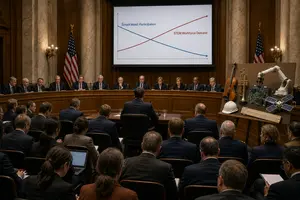
The favorable findings prompted the House Committee on Government Operations to schedule hearings examining whether elements of the Persian governance model could improve federal administrative decision-making.
Committee members repeatedly emphasized that the hearings should not be interpreted as endorsing any specific historical practice.
Instead, lawmakers described the inquiry as an opportunity to better understand why relatively simple governance procedures appeared capable of producing measurable improvements within highly structured modern institutions.
The Department of Sequential Approvals simultaneously announced the creation of an Interagency Working Group on Sequential Decision Validation to determine whether existing federal regulations adequately distinguish between idea generation and final decision approval.
The Office of Stakeholder Alignment confirmed that more than eighty organizations had requested observer status.
Meanwhile, the Center for Regulatory Excellence released an economic assessment estimating that widespread implementation could substantially reduce expenditures associated with repetitive strategic planning sessions, external facilitation contracts, and duplicated governance reviews.
Dr. Alan Prescott, Senior Economist at the Center, urged caution when interpreting those projections.
"Economic efficiency frequently produces secondary market adjustments," Prescott said. "The resources currently devoted to increasingly elaborate decision-making processes support significant employment across multiple professional sectors. Improvements in administrative productivity inevitably create transitional challenges for organizations whose value proposition depends upon administrative complexity."
The report stopped short of recommending against implementation.
Instead, it proposed additional economic modeling to better understand how improved decision-making might affect the broader governance services marketplace.
Universities Call For Additional Research Despite Consistent Findings
Within days of the report's publication, several universities announced new interdisciplinary research initiatives intended to determine whether the Persian governance sequence represented a unique historical phenomenon or a more general principle of organizational behavior.
Westbridge University established the Center for Sequential Decision Studies, bringing together researchers from psychology, economics, public administration, and organizational management.
Professor Adrian Keller, Chair of Comparative Epistemology, cautioned against drawing overly simplistic conclusions.
"The historical record suggests that the Persians separated uninhibited idea generation from sober evaluation," Keller said. "What remains unclear is whether the improvement arises from reduced inhibition, delayed commitment, overnight cognitive consolidation, or some interaction among all three. We should resist reducing a complex governance phenomenon to a single explanatory variable."
The National University of Administrative Sciences announced a five-year longitudinal study comparing organizations using the Persian sequence with organizations relying upon conventional executive retreats, facilitated brainstorming workshops, and strategic planning conferences.
Researchers estimated that meaningful conclusions could require several years despite the pilot's favorable results.
The Foundation for Better Public Outcomes welcomed the expanded research while encouraging agencies to continue limited implementation where appropriate.
"We support evidence-based governance," Executive Director Linda Foster said. "Fortunately, the pilot has produced additional evidence supporting the evidence we already had."
Agencies Prepare Guidance While Adoption Remains Uncertain
Although no government agency questioned the accuracy of the pilot's findings, several announced that implementation guidance would require careful coordination before broader adoption could be considered.
The Department of Administrative Affairs established a Technical Advisory Panel to develop standardized terminology for agencies choosing to conduct sequential governance sessions.
Among the questions under review were the appropriate definition of "morning," acceptable intervals between meetings, documentation standards for evening discussions, record retention requirements, and procedures for evaluating recommendations that appeared substantially wiser after breakfast than they had the previous evening.
The Office of Regulatory Harmonization confirmed that several existing guidance documents would likely require revision.
Meanwhile, the Department of Sequential Approvals began drafting preliminary implementation recommendations that would eventually be circulated for public comment before entering formal interagency review.
Officials estimated that the guidance development process could require eighteen to twenty-four months.
The Office of Administrative Continuity characterized the timeline as "consistent with established best practices for procedural modernization."
Administrative Success Creates An Unexpected Challenge
Perhaps the most surprising finding emerged not from the pilot itself but from interviews conducted after participating organizations returned to their traditional governance procedures.
Investigators reported that many participants found conventional meetings increasingly difficult to justify.
Several agencies noted that discussions appeared longer while producing fewer original ideas.
Employees reported recognizing conversational patterns that had previously gone unnoticed, including rapid convergence around senior leadership opinions and repeated reconsideration of proposals that had already been evaluated during earlier meetings.
The report emphasized that these observations were subjective and should not be interpreted as formal performance metrics.
Nevertheless, evaluators concluded that exposure to the Persian governance sequence appeared to alter participant expectations regarding how organizational decisions should be developed.
The Association of Responsible Stakeholders responded by announcing a National Summit on Sustainable Governance Practices, bringing together consultants, compliance specialists, executive coaches, policy analysts, and implementation experts to examine how institutions might preserve the strengths of existing administrative systems while incorporating lessons learned from the pilot.
Conference organizers described the event as "an important opportunity to explore the future of governance through collaborative dialogue."
Registration opened immediately.
At press time, the Department of Administrative Affairs confirmed that the Persian Governance Pilot Program had exceeded every predefined performance benchmark established at the beginning of the study. The Department also announced the formation of an Interagency Steering Committee to evaluate whether additional pilot programs would be necessary before considering broader adoption of the pilot program that had already demonstrated measurable improvements.
Sarah Collins, GFNN Washington Bureau
For more sustainably sourced certified organic Genuine Fake News, click here.
Recent Articles


-
The Gentle Night Friends Series
Aug 23, 26 03:38 PM
 The Gentle Night Friends Series is a collection of SEL children's stories.
 -
Senator Replaced Himself With Android: Committee Investigates
Aug 10, 26 12:32 PM
 Senator replaced himself with an android characterized as a "Legislative Productivity Surrogate," prompting a Judiciary Committee inquiry into voting, representation, AI autonomy, and constitutional p…
 -
Congress Opens Investigation Into the Decline of Music Education
Aug 03, 26 02:18 PM
Congress Opens Investigation Into the Decline of Music Education after educators report unexpected changes in student learning, prompting federal hearings, academic reviews, and industry responses.